The masseiras or masseira fields are a unique form of agriculture in the world, existing in the parishes of Estela, Navais and Aguçadoura in Póvoa de Varzim and in the neighboring parishes of Apúlia and Fão in Esposende. This form of agriculture consists of digging a wide, rectangular hole in the dunes.
In the corners of the cave known as ‘valos’, vines are grown in order to protect the central area from the winds. In the central area, there is fresh water, not salt water as we might suppose, and everything can be cultivated, but large amounts of water and sargassum (to fertilize the soil) are needed for what is cultivated to sprout.
With this cave of just a few meters deep, a thermal increase is achieved, which, together with the ‘valos’ and the vines that protect the field from the winds, make the troughs work as a kind of greenhouse.
These ‘valos’ are built with sand removed from the land, which was too much, having functions, such as creating a microclimate and also sealing the land. It must not be forgotten that the construction of the kneading troughs was manual, with no machines or transport capable of transporting the surplus sand to other locations, remaining on the edges of the land, forming the ‘valos’
This type of agriculture was invented in the 18th century by Benedictine monks from Tibães Abbey.
At the end of the 19th century, due to the high population growth, the farmers of Aguçadoura (a village that is partially located on top of these ancient dunes) began to feel the need for more land for their sowing. So some farmers from the northern part of this town decided to make small vegetable gardens on the land next to their homes, removing the surface layer of sand for this purpose.
Around 1880 some farmers began to remove a greater layer of sand to reach more humid layers, with the removed sand placed at the ends of the property, giving the land the shape of a trough. As these lands were lowered, in winter they did not have absorption capacity, as they were very close to the water table. In order to solve this problem, a system was built to drain the water called “bleeding”.
To fix the sand in the ‘valos’ of the masseiras, vines were planted at the bottom, and these grew along the ‘valos’ above. However, the production of grapes was poor, as the vines were in contact with the sand, which was very hot during the day. This issue was also resolved as the vines were raised on stakes about half a meter high, which resulted in an immediate increase in production. Until 1900 there were about 20 owners who made use of this type of land, but with the abundance of production, this cultivation system became generalized.
Today, with the option on the part of the farmers for the greenhouses, the kneaders are on the verge of extinction.
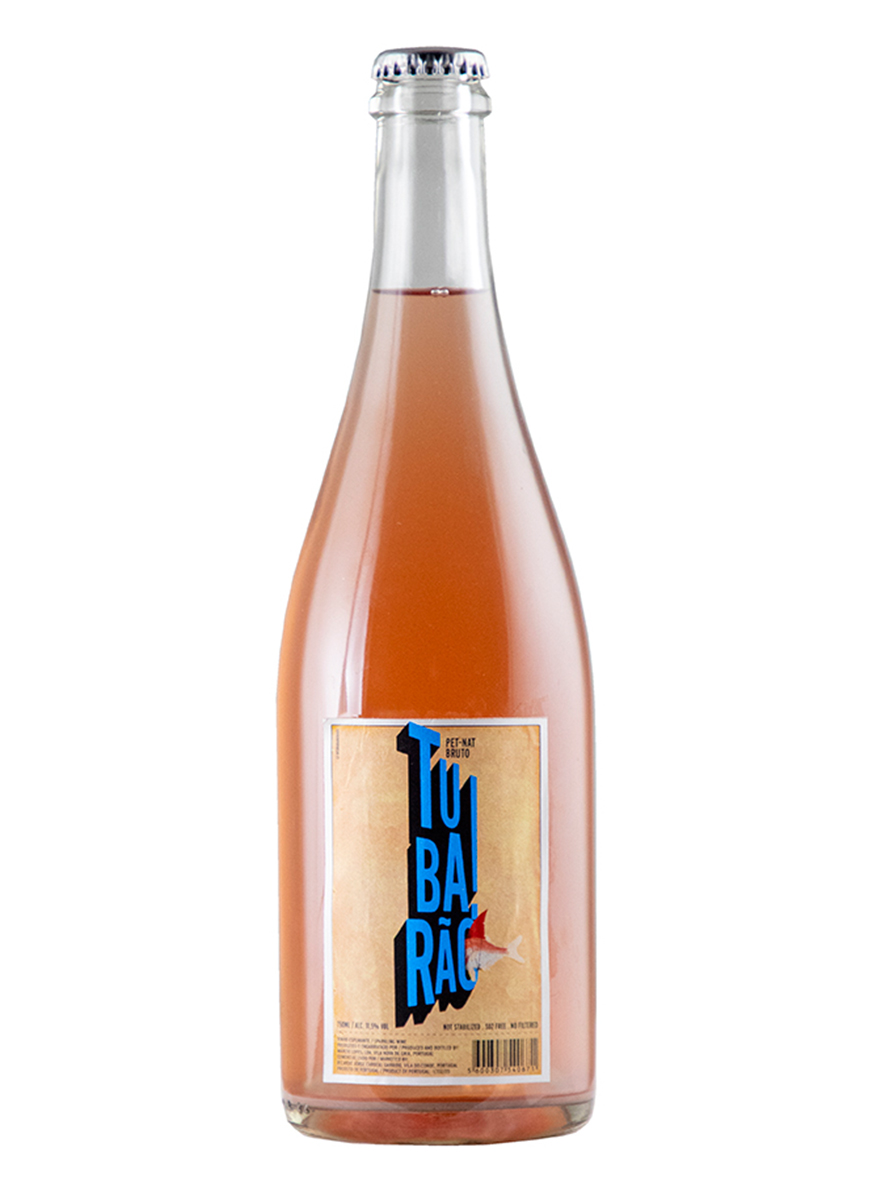
The shark! is a straw wine made in the Pet-Nat style, a partnership between Ricardo Garrido and Márcio Lopes. It respects and rescues a unique and almost lost culture. A production limited to 3500 bottles